Primate Tunnel Cable Mesh

Order Sent – Hand Woven SS Cable Mesh
2026-09-08
Order Sent to USA – Hand Woven SS Wire Mesh
2026-09-24Primate Tunnel Cable Mesh
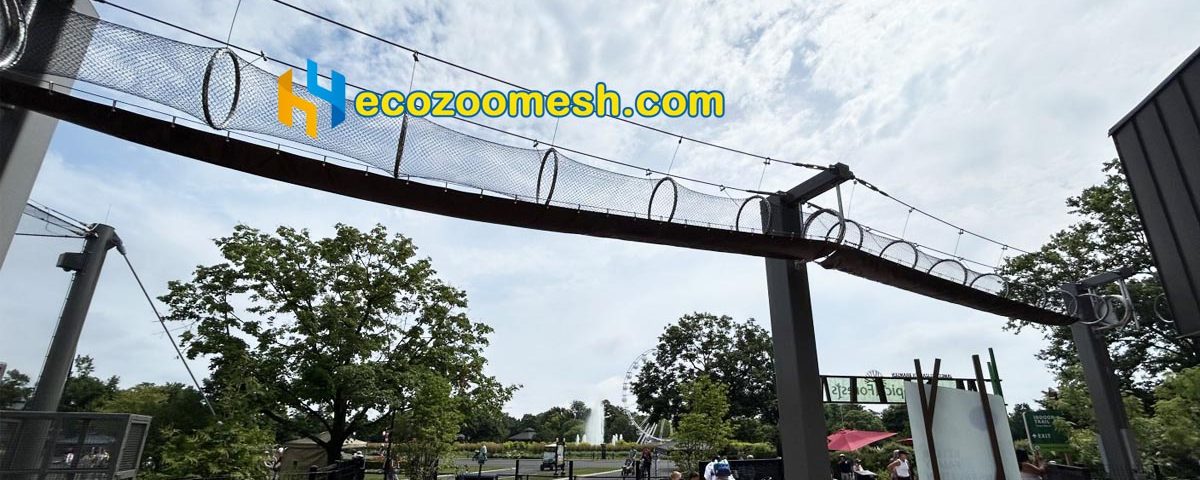
Primate Tunnel Cable Mesh: The Ideal Solution for Modern Primate Exhibits
Creating an engaging, safe, and visually compelling environment for primates is one of the most significant challenges facing modern zoos and wildlife parks. Primates are intelligent, active, and highly social animals whose physical and psychological well-being depends on having access to complex, three-dimensional spaces that encourage natural behaviors. Among the many design elements that contribute to a successful primate exhibit, primate tunnel cable mesh has emerged as a transformative solution—offering a combination of strength, flexibility, transparency, and safety that few other materials can match.
Understanding Primate Behavioral Needs
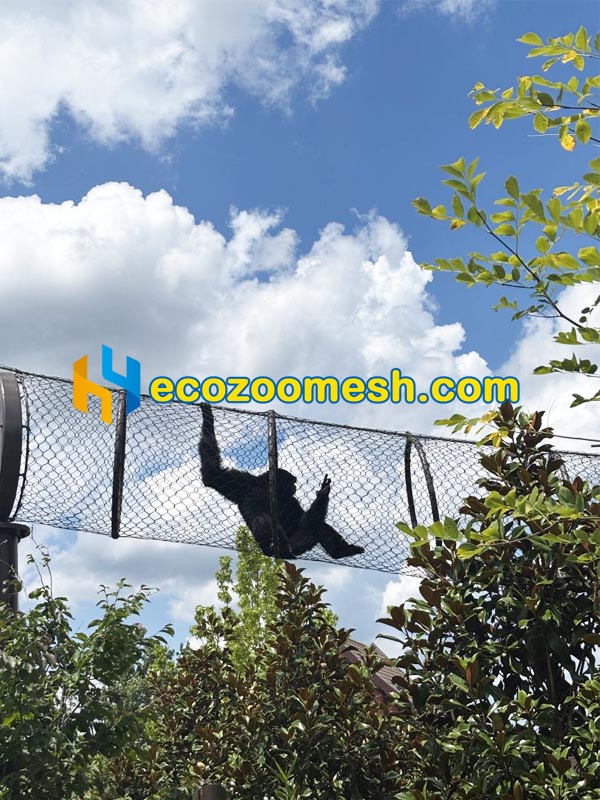
To appreciate why cable mesh works so well for primate tunnels, it is important to first understand how primates move and interact with their surroundings. Many primate species are arboreal, spending the majority of their time in trees and moving through a form of locomotion known as brachiation—swinging from branch to branch using their arms and, in some cases, prehensile tails. This mode of movement requires elevated pathways that allow primates to travel above the ground, maintaining the sense of security and freedom they would experience in the wild.
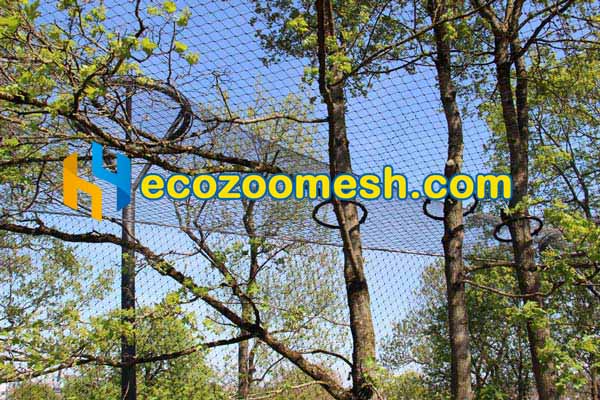
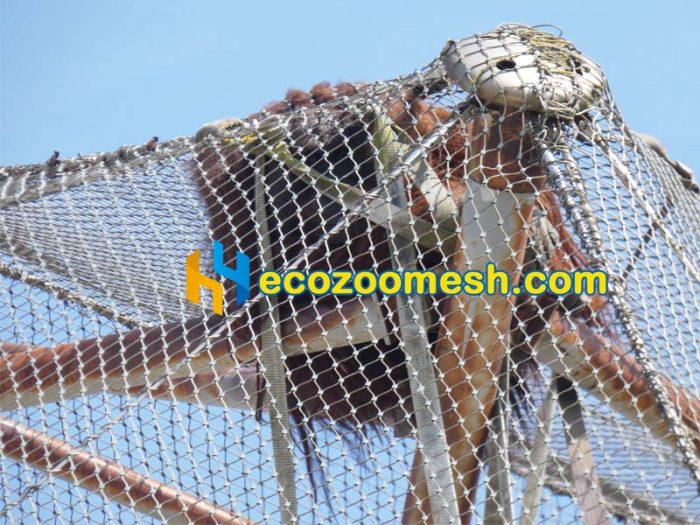
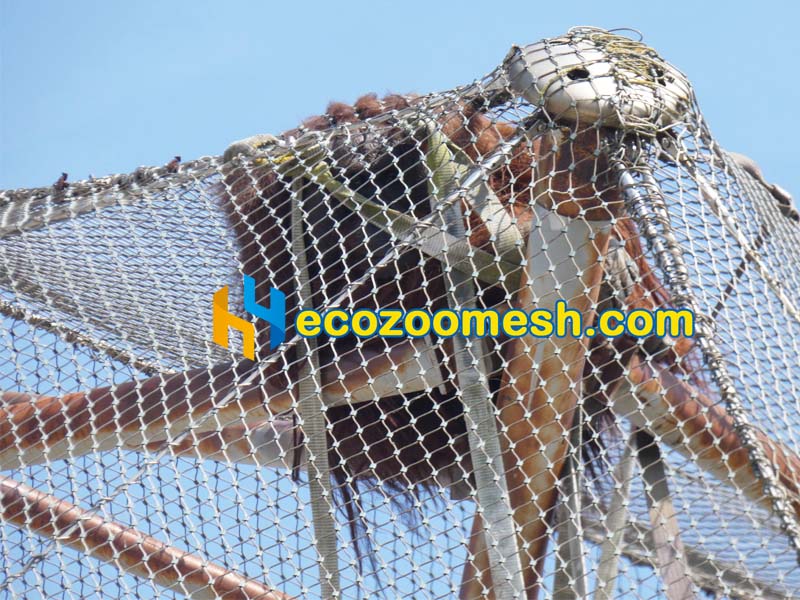
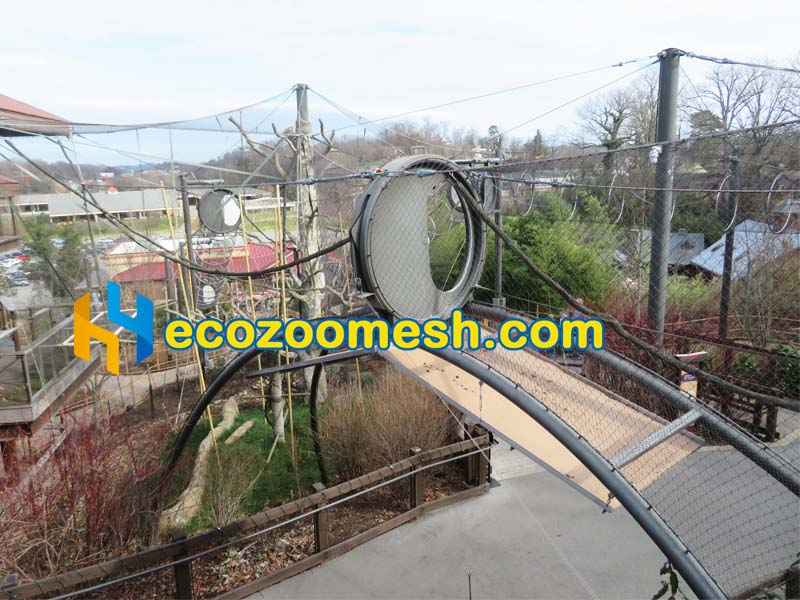
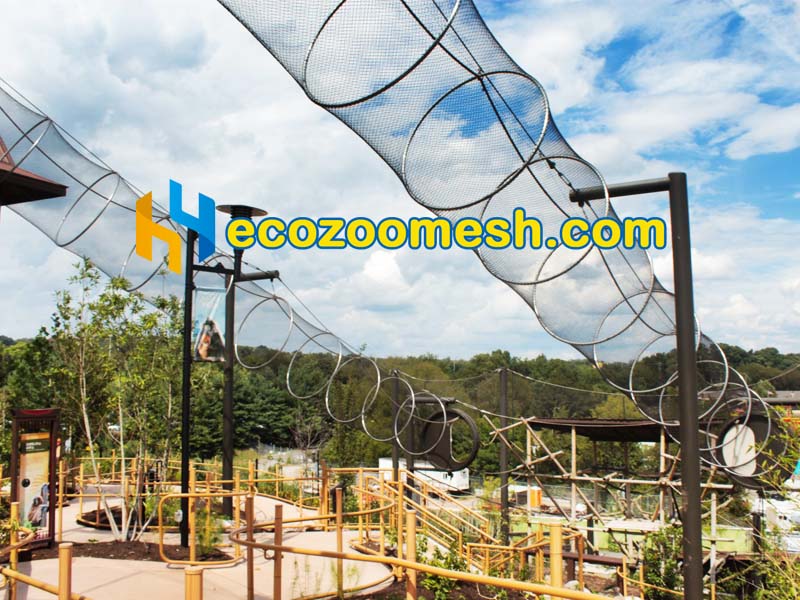
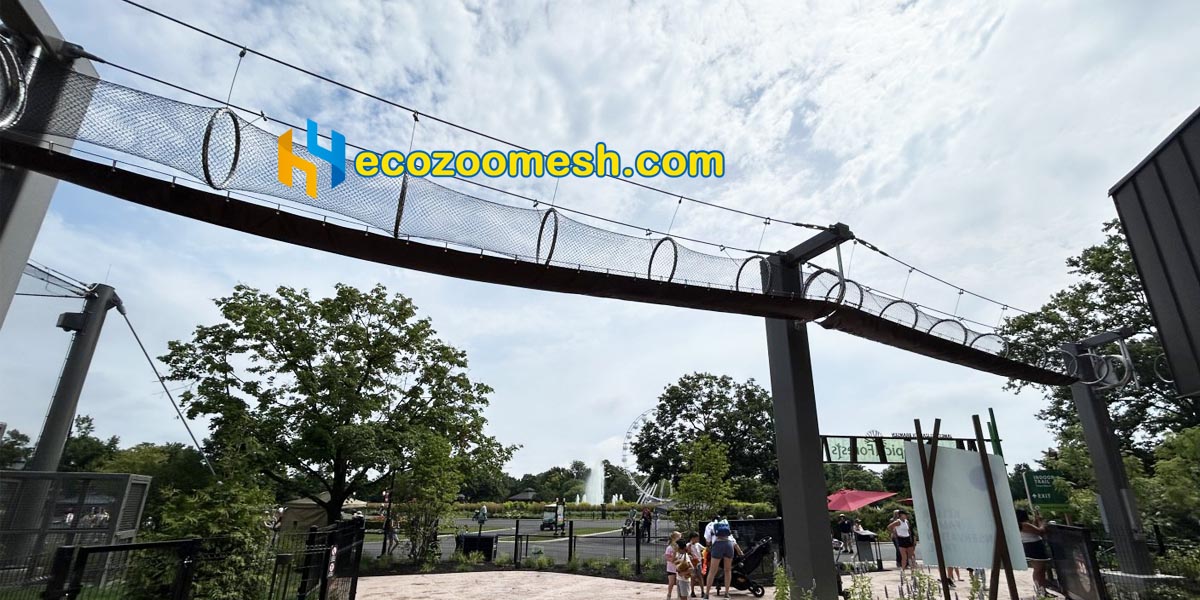
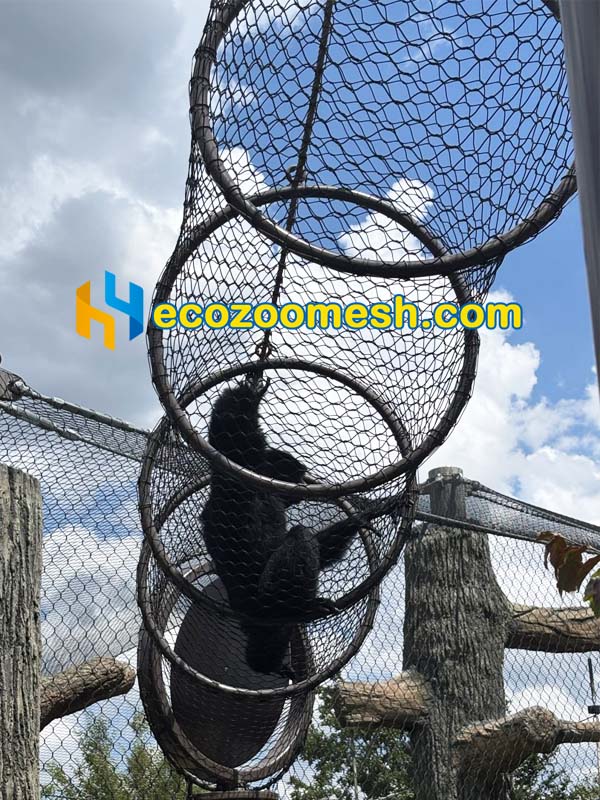
In captivity, elevated primate tunnel cable mesh systems serve as substitutes for the forest canopy. They connect different areas of an enclosure, provide additional space for exploration, and create opportunities for animals to exercise natural climbing and swinging behaviors. For zoo visitors, these tunnels offer a unique viewing experience—allowing them to observe primates from multiple angles, including from below, as the animals move overhead.
Why Stainless Steel Cable Mesh Excels as a Tunnel Material
When designing a primate tunnel, the choice of mesh material is critical. The ideal material must be strong enough to withstand the impact and weight of active primates, yet flexible enough to accommodate the curved, tubular shape of a tunnel. It must also be safe, durable, and visually unobtrusive. Stainless steel wire rope mesh meets all of these requirements exceptionally well.
Softness and Flexibility
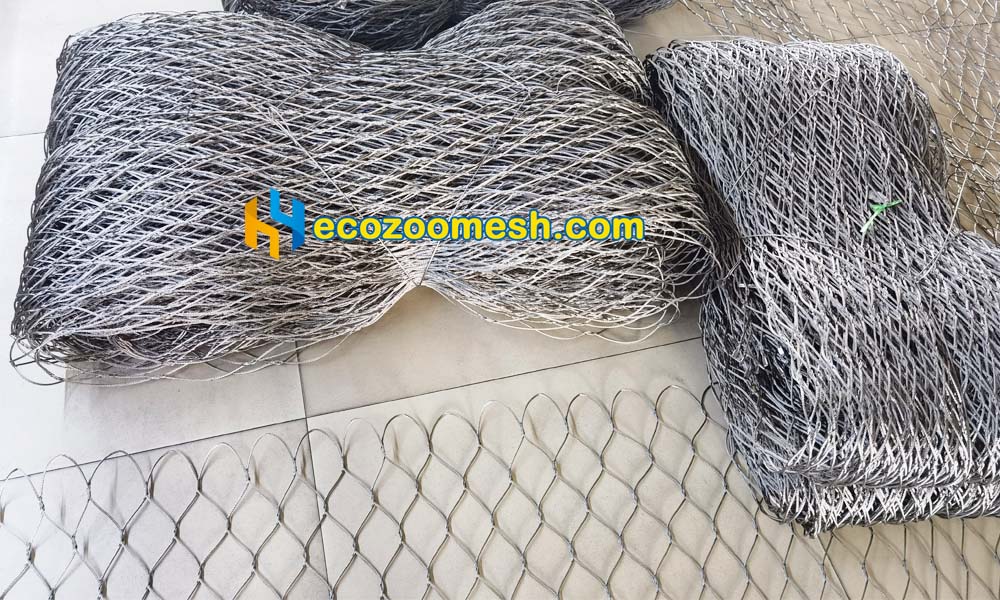
One of the most important characteristics of stainless steel primate tunnel cable mesh is its softness and flexibility. Unlike rigid welded wire mesh or metal bars, cable mesh is woven from individual wire ropes, giving it a supple, textile-like quality. This flexibility is essential for tunnel applications, where the mesh must be shaped into cylindrical or arched forms. Cable mesh can be folded, rolled, and bent without losing its structural integrity, making it easy to install on curved support frames.
The soft texture of the mesh is also important for primate safety. When animals climb, swing, or rest against the mesh, the smooth, pliable surface reduces the risk of abrasions or injuries that can occur with harder, more rigid materials.
Strength and Durability
Despite its soft appearance, stainless steel primate tunnel cable mesh is remarkably strong. The wire ropes used in its construction are typically made from high-grade 304 or 316 stainless steel, materials known for their corrosion resistance and tensile strength. The mesh is hand-woven or assembled using ferrules, creating a structure that distributes loads evenly and resists deformation under stress.
For primate tunnels, this strength translates into reliable containment. Even large, powerful primates cannot break through or damage the mesh under normal conditions. The mesh also withstands environmental challenges such as rain, snow, UV exposure, and temperature fluctuations, ensuring a long service life with minimal maintenance.
Transparency and Visibility
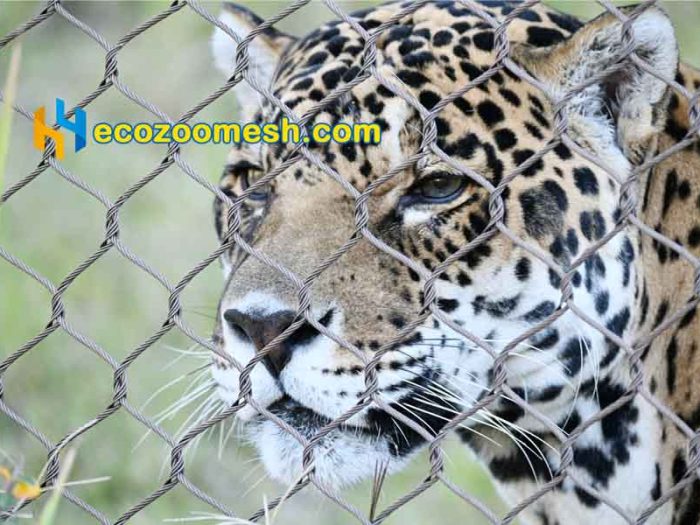
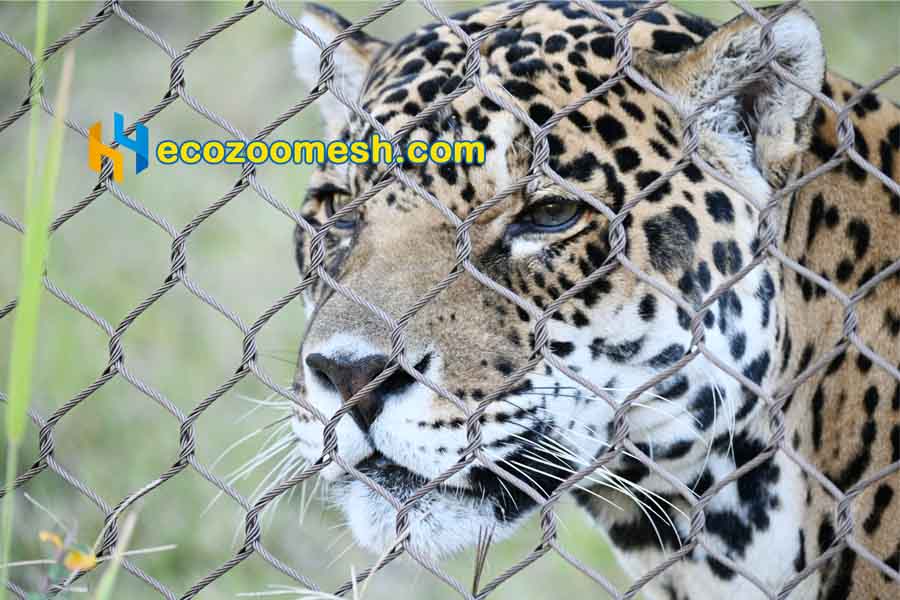
Visual transparency is another advantage that makes cable mesh ideal for primate tunnels. The thin wire ropes and open diamond pattern create a mesh that is almost invisible from a distance. It allows visitors to see the animals clearly without the obstruction of heavy bars or thick fencing. This transparency benefits the animals as well, reducing the feeling of being enclosed and allowing them to see their surroundings from all angles.
For tunnel systems specifically, this transparency is crucial. A tunnel made from opaque materials would block views and create a dark, enclosed passage. Cable mesh tunnels, by contrast, are light-filled and open, encouraging primates to use them freely.
Design Considerations for Primate Tunnel Cable Mesh
When specifying cable mesh for a primate tunnel, several factors should be considered to ensure optimal performance and safety.
Mesh Specifications for Primate Tunnel Cable Mesh
The appropriate mesh specifications depend on the species being housed. Smaller primates, such as marmosets or squirrel monkeys, require smaller mesh openings and finer wire ropes. Larger species, including macaques, baboons, and great apes, need larger wire diameters and wider openings that still provide secure containment.
Common specifications for primate tunnel mesh include wire rope diameters ranging from 1.6 mm to 3.2 mm. And the mesh openings from approximately 38 mm to 76 mm. For small primates, a mesh such as 1.6 mm wire with 30 mm openings may be appropriate. While larger primates might require 2.4 mm wire with 51 mm openings.
Primate Tunnel Cable Mesh Diameter and Support
The diameter of the tunnel should be sufficient to allow animals to move comfortably without feeling cramped. A diameter of approximately 75 cm (about 30 inches) is typical for monkey tunnels, though larger diameters may be used for great apes. The mesh is supported by solid steel rings spaced at regular intervals—often around 100 to 200 cm apart—which maintain the tunnel’s shape and structural integrity.
Material Grade Selection
The choice between 304 and 316 stainless steel depends on the environment. For most inland zoos with moderate humidity, 304 stainless steel offers excellent performance and value. In coastal areas, rainforest exhibits, or other highly humid environments, 316 stainless steel is preferred because its molybdenum content provides superior corrosion resistance.
The Role of Cable Mesh in Primate Enrichment
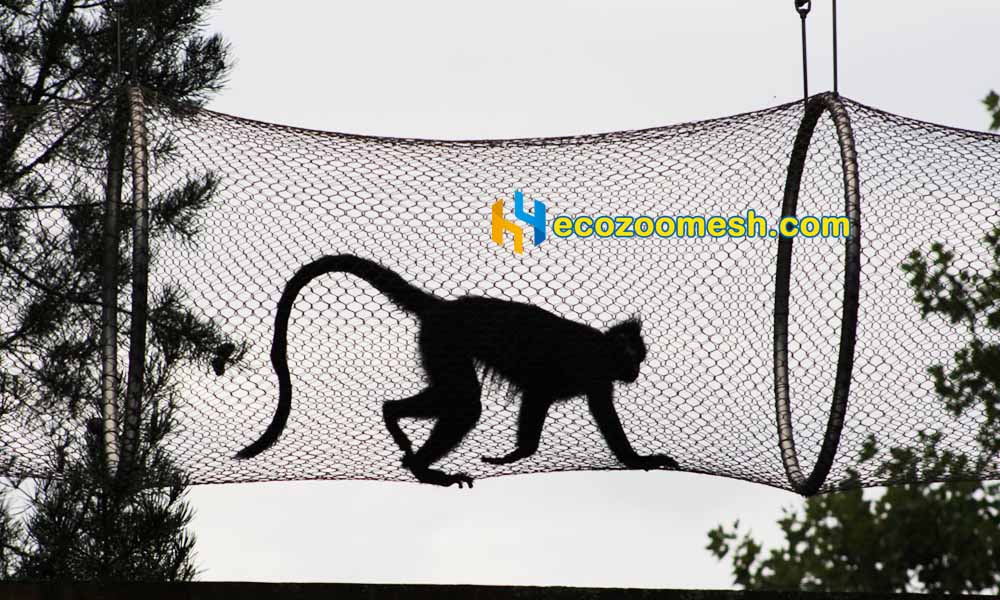
Beyond its practical functions of containment and safety, cable mesh contributes directly to primate enrichment. Elevated tunnels expand the usable space of an enclosure. It is giving animals the opportunity to travel, explore, and exercise in ways that ground-level enclosures alone cannot provide.
The mesh itself also serves as a climbing surface. Primates can grip the wire ropes with their hands and feet, using the mesh to climb, hang, and swing. This encourages physical activity and helps maintain muscle tone and coordination. The flexibility of the mesh adds an element of challenge and engagement that rigid structures lack.
Contact us for the primate tunnel cable mesh
Primate tunnel cable mesh represents a convergence of animal welfare, visitor experience, and architectural design. The softness and flexibility of stainless steel wire rope mesh make it uniquely suited to tunnel applications. While its strength, durability, and transparency ensure that it performs reliably and looks elegant for years to come. For zoos and wildlife parks seeking to create dynamic, enriching environments for their primate collections. Cable mesh tunnel systems offer a solution that benefits animals and visitors alike.
If you are looking for the cable mesh, please feel free to contact us for a quote or sample.
Emails: [email protected] / [email protected]